
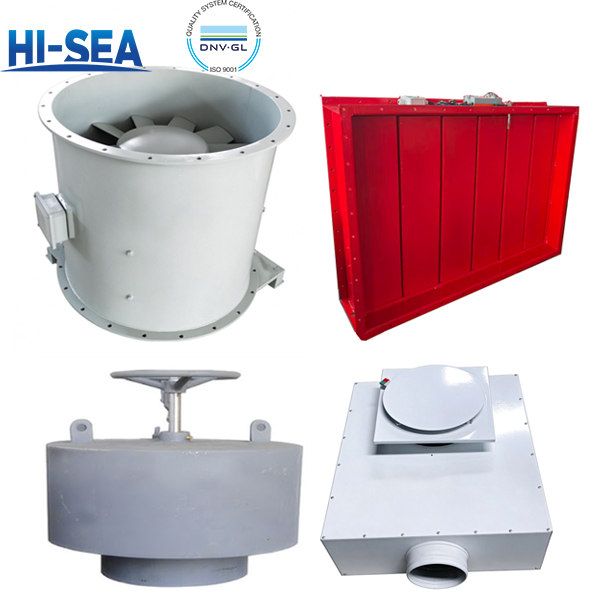
We specialize in providing complete ventilation systems for new ships and replacement ventilation products for ship repairs. Our main products include marine axial fans, centrifugal fans, fire dampers, air dampers, ventilation louvers, ventilation ducts, and complete sets of ventilation accessories.
Our ventilation products are designed in strict accordance with marine specifications and are available with certifications from classification societies such as CCS, BV, LR, and NK. They feature marine-grade characteristics including salt-fog resistance, corrosion resistance, moisture resistance, explosion-proof design, low noise, and seismic resistance, and are suitable for a wide range of vessel types, including bulk carriers, container ships, oil and chemical tankers, yachts, offshore platforms, and wind turbine installation vessels.
Key specialty products:
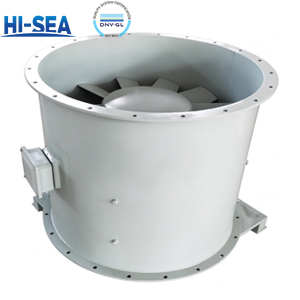
Marine Blower Fan |
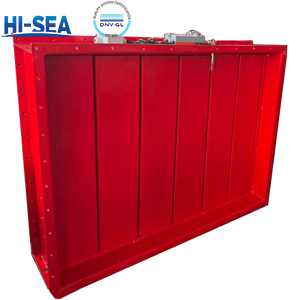
Marine Fire Damper |
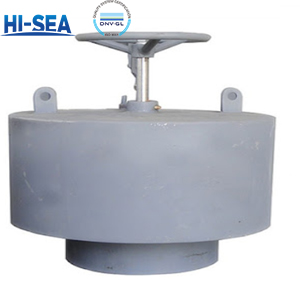
Marine Ventilator |
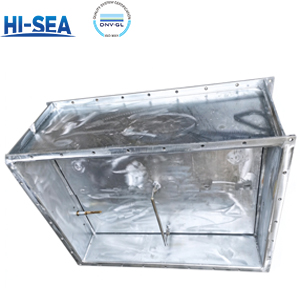
Marine Damper |
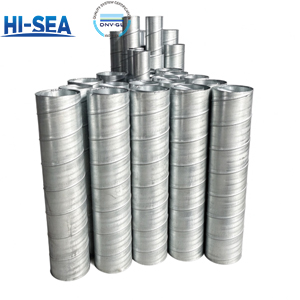
Spiral Ducts and Fitings |
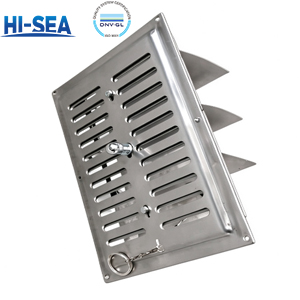
Ventilation Grille |
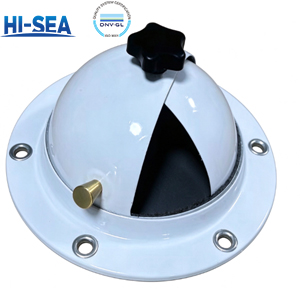
Air Vent |
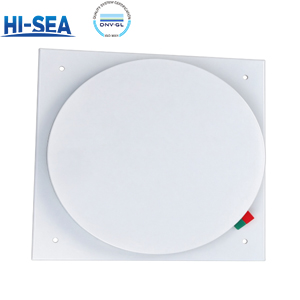
Diffuser |
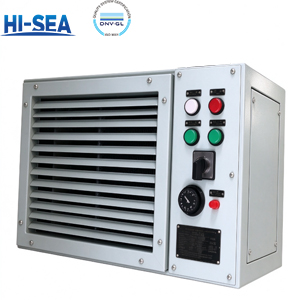
Marine Fan Heater |
1. Marine Blower Fan
Marine fans primarily provide ventilation, heat dissipation, and the removal of oil vapors and harmful gases in areas such as engine rooms, living quarters, and pump rooms.
Based on their structure, they are classified into marine axial fans, marine centrifugal fans, water-powered fans, reversible fans, and explosion-proof fans, among others; The entire unit is designed to withstand high-salt-fog, humid, and vibration-prone marine environments. Materials include galvanized steel and stainless steel, meeting fire-resistant, explosion-proof, and low-noise requirements. Custom designs can also be developed based on specific ventilation requirements.
2. Marine Fire Damper
Marine fire dampers are installed where ventilation ducts penetrate bulkheads or decks to delineate fire zones. During normal ventilation, the blades remain open to ensure airflow; in the event of a fire, they automatically close via a heat-sensitive fusible element or electric drive, blocking the duct passage and preventing the spread of flames and smoke through the ventilation system.
Marine fire dampers are available in manual, electric, and pneumatic types, with material options including carbon steel, 304 stainless steel, and 316 stainless steel. Available fire resistance ratings include A0, A15, A30, A60, and others.
3. Marine Ventilator
Marine ventilators are ventilation and airflow devices for open-air areas of ships. Installed on the deck, they serve as air intake or exhaust channels for compartments, ensuring ventilation while effectively preventing seawater and rain from directly entering the ducts.
Structures include mushroom-type and gooseneck-type vents, among others, with material options including galvanized carbon steel and stainless steel;
Features include vibration resistance and corrosion resistance, and some models are equipped with weather-tight shut-off devices.
4. Marine Damper
Marine dampers are airflow control devices used in ship ventilation and air conditioning ductwork. Installed in duct sections, they regulate airflow and balance system pressure by adjusting the opening of their blades or damping plates, and can also be used to open or close the duct.
They are available in circular and rectangular configurations; Operation methods include manual, electric, and pneumatic; and materials include galvanized carbon steel and stainless steel.
Applications may require fire-resistant, watertight, gas-tight, smoke-proof, or explosion-proof features.
5. Spiral Ducts and Fitings
Spiral ducts are airflow conveyance pipes used in shipboard ventilation and air conditioning systems. They are formed by rolling galvanized steel sheet or stainless steel into a spiral shape, offering high strength, excellent airtightness, smooth inner walls, low air resistance, and ease of on-site assembly;
When combined with duct fittings, they form a complete duct system. Common fittings include reducers, elbows, tees, flanges, flexible connectors, and clamps.
Materials can be selected as needed from galvanized steel or stainless steel. These ducts are used for supply and exhaust ventilation, as well as air conditioning distribution, in spaces such as engine rooms, living quarters, and pump rooms. They are widely used on various types of ships and offshore platforms, and can be custom-made to non-standard dimensions according to drawings.
6. Ventilation Grille
Marine ventilation grilles are terminal components of a ship’s ventilation system. Installed at ventilation openings in bulkheads, doors, and decks, they ensure airflow while preventing rain, spray, and debris from entering the interior;
Structures include fixed, movable, and weather-tight types; materials include galvanized carbon steel and stainless steel;
Features: Resistant to salt fog corrosion and ship roll and pitch vibrations; can be used in conjunction with louvers and filters.
7. Air Vent
Marine air vents are terminal supply and return air components for ship ventilation systems, designed to regulate airflow, ensure uniform distribution, and adapt to various types of compartments.
The structure is typically spherical, with the sphere capable of rotating to any angle to adjust the direction of the airflow.
Materials primarily include ABS plastic, galvanized carbon steel, and stainless steel, with an airflow range of 0–500 m³/h.
8. Diffuser
Marine diffusers serve as terminal ventilation devices for ship living quarters, conference rooms, and other compartments. Installed on bulkheads or ceilings, they evenly distribute air conditioning or ventilation airflow to avoid direct drafts and ensure gentle airflow distribution within the compartment;
The unit consists of a housing and a diffuser, allowing for adjustment of airflow volume and direction. It features a built-in sound-attenuation mechanism to reduce supply air noise. The housing is typically made of galvanized carbon steel or stainless steel, while the diffuser is usually made of ABS plastic.
Features include uniform air distribution and adjustable noise reduction; these diffusers are widely used in living quarters on various types of ships and offshore platforms.
9. Marine Fan Heater
Most marine heaters are electric, consisting of a fan assembly, electric heating elements, a temperature control system, and a control box. When powered on, they drive airflow through the heating core to produce hot air, which is used for heating and maintaining temperature in compartments such as living quarters, control rooms, and work areas.
They feature built-in overheat protection and temperature control functions, allowing users to turn the unit on and off and adjust the temperature; the housing is coated with a corrosion-resistant finish, and the unit features a compact design and easy installation;
Power ratings are available from 1 kW to 8 kW, with customization options, and models are available in both explosion-proof and standard versions; they are widely used for winter heating and for warming and dehumidifying compartments on various types of vessels and offshore platforms.