
Overview
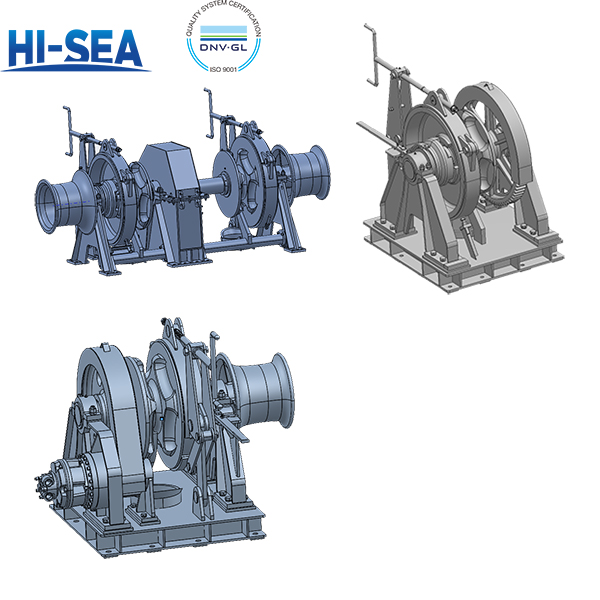
Marine Hydraulic Anchor Windlass is heavy-duty deck machinery driven by a hydraulic power pack, designed for dropping, lifting and holding anchor and anchor chain. It features high torque, stable low-speed performance and strong overload resistance. Available in single gypsy, double gypsy and combined versions with warping drum. Widely adopted on large ocean-going cargo vessels, tankers, container ships, offshore support vessels and dredgers. It is the preferred anchoring equipment for heavy load working conditions compared with electric anchor windlass. It consists of hydraulic power unit, hydraulic motor, reduction gearbox, gypsywheel/sprocket/cable lifter, brake, clutch, hydraulic control valve group, control system, base frame, etc.
Product Classification
✅ Marine Hydraulic Single Gypsywheel Windlass
✅ Marine Hydraulic Double Gypsywheel Windlass
✅ Marine Hydraulic Combined Anchor Windlass
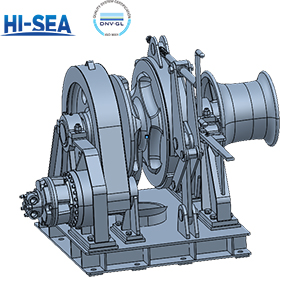
Marine Hydraulic Single Gypsywheel Windlass |
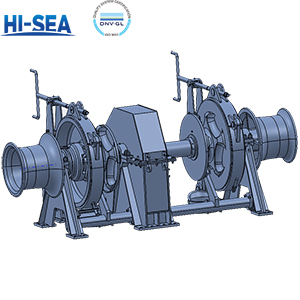
Marine Hydraulic Double Gypsywheel Windlass |
Marine Hydraulic Combined Anchor Windlass |
Technical Specifications
The table below shows representative ranges. Custom chain diameters, pull ratings and hydraulic system parameters are available on request.
| Parameter | Specification Range |
| Chain Diameter | 14 mm – 120 mm+ |
| Chain Grade | AM1 / AM2 / AM3 |
| Drive Type | Hydraulic motor with reduction gearbox |
| Continuous Duty Pull (PC) | Calculated per class rule (kN): AM1/U1/Q1: PC = 0.0375d2| AM2/U2/Q2: PC = 0.0425d2 AM3/U3/Q3: PC = 0.0475d2 where dd = chain diameter in mm |
| Temporary Overload Pull | ≥ 1.5 × PC, for at least 2 minutes |
| Nominal Speed | ≥ 0.15 m/s (average, over two shots of chain) |
| Brake Holding Capacity | ≥ 45% of chain breaking load (with chain stopper) ≥ 80% of chain breaking load (without chain stopper) |
| Hydraulic System Pressure | Typically 9–13.5 MPa for mid-size units; higher for heavy-duty configurations |
| Hydraulic Flow | Matched to motor displacement and required hoisting speed |
| Power pack option | Dedicated power pack or integration with vessel’s central hydraulic system, electro-hydraulic, diesel engine driven hydraulic, shaft-driven hydraulic(PTO) optional. |
| Control | Local control; remote control from bridge or wheelhouse optional |
| Configuration | Single gypsywheel / double gypsywheel; with or without warping head, combined type with mooring drum |
| Certificate | CCS / BV / RINA / IRS, etc, as required |
Key Advantages
🔹 Huge starting torque, stable low-speed running, smooth chain picking
🔹 Strong overload capacity, suitable for large chain diameter and heavy anchor
🔹 Stepless speed regulation through hydraulic control, easy speed adjustment|
🔹 Reliable braking system, dual safety protection of hydraulic brake + mechanical brake
🔹 Low running noise, stable performance under continuous heavy-duty operation
🔹 Optional local control, bridge remote control and proportional control
🔹 Heavy anti-corrosion paint system, salt fog resistant for long-term marine service
🔹 Customizable: chain diameter, pulling force, chain speed, working pressure
Frequently Asked Questions
Q: What is the main difference between hydraulic anchor windlass and electric anchor windlass?
A: Hydraulic type delivers larger torque and better overload performance, ideal for large heavy vessels; electric type has simpler structure, no hydraulic pipeline and lower maintenance cost, suitable for medium and small ships.
Q: Does hydraulic windlass have leakage risk?
A: Properly installed and regularly maintained hydraulic system can minimize leakage; we adopt high-quality sealing components for long service life.
Q: Can your hydraulic windlass connect to the vessel’s existing central hydraulic system?
A: Yes, provided the existing system can supply the required pressure and flow for the windlass motor. We review the vessel’s hydraulic system parameters (pressure, flow, oil cleanliness, cooling capacity) before quotation and confirm whether direct integration is feasible or a dedicated power pack is required.
Q: What hydraulic pressure and flow does the windlass require?
A: Mid-size units typically operate around 9-13.5 MPa, with flow matched to motor displacement and required hoisting speed. The exact pressure and flow depend on chain diameter, required working load, nominal speed and gearbox ratio. Provide your chain specification and available hydraulic system parameters, and we will confirm the motor and power pack requirements.
Q: What maintenance does a hydraulic windlass require?
A: Regular maintenance includes hydraulic oil analysis, filter changes, leak inspection, hose and seal inspection, brake adjustment and load-bearing component inspection. Oil cleanliness is critical to hydraulic motor and valve life