
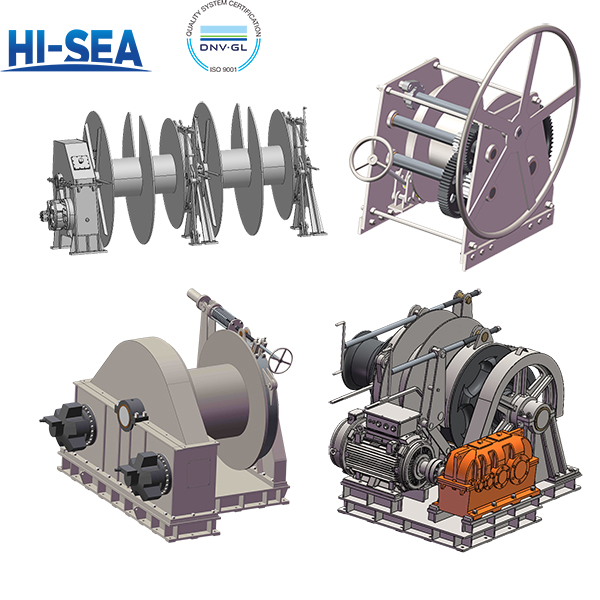
Application
A marine winch is a load-bearing deck machine whose primary function is to manoeuvre, hold and store a rope or wire under tension. Unlike a windlass, which is dedicated to anchor chain handling, a winch operates on fibre rope or steel wire. It is used across three broad duty categories: mooring (holding the vessel alongside a berth), towing (transmitting towline force from a tug to its tow), and anchor handling (deploying, recovering and repositioning anchors and subsea equipment on AHTS vessels).
Main Types
✅ Mooring Winch (Most commonly used)
Single /double/split drum, optional constant tension control, for berthing and securing a vessel alongside a quay.
✅ Towing Winch
Heavy-duty, large rope capacity, emergency quick-release, installed on tugboats, AHTS, and supply vessels for offshore towing.
✅ Anchor Handling Winch
For offshore anchor deployment & recovery on rig, AHTS, works together with anchor windlass.
✅ Marine Towing and Anchor Handling Winch
Heavy Duty Anchor Handling & Towing Winch for AHTS, Offshore Tug & Supply Vessel
✅ Marine Positioning Winch
High Precision Multi-point Anchoring & Station-Keeping Winch for Offshore Engineering Vessels
✅ Ramp Winch / Hatch Winch
For ferry ramp, hatch cover driving.
✅ Drive options
Hydraulic|Electric|Diesel Engine|Manual
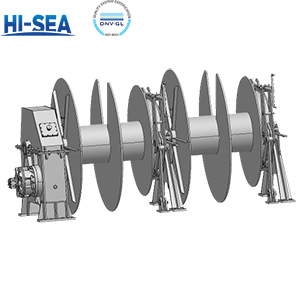
Marine Hydraulic Winch |
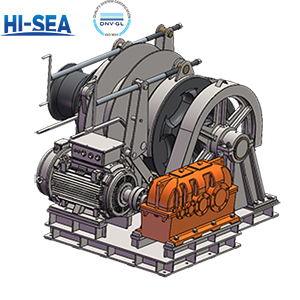 Marine Electric Winch |
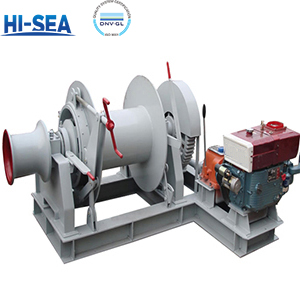 Marine Diesel Engine Driven Winch |
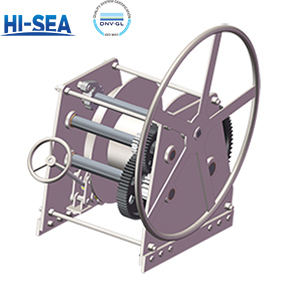 Marine Hand Winch |
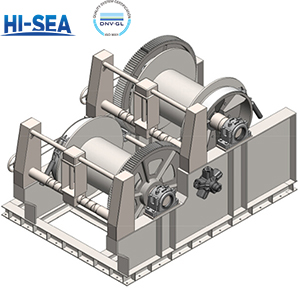
Marine Towing Winch |
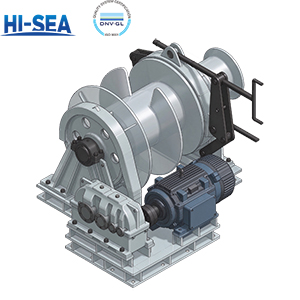
Marine Anchor Handling Winch |
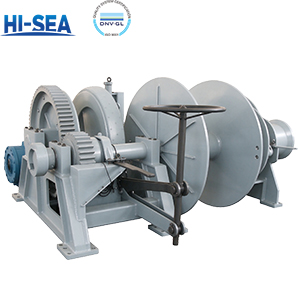
Marine Towing and Anchor Handling Winch |
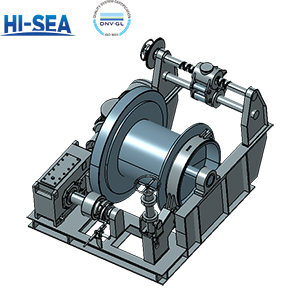
Marine Positioning Winch |
Marine winches are typically used with wire rope and mooring/fiber rope. For more information, please click the links below:
For mooring rope information, please click here.
For steel wire rope information, please click here.
Key Features
🔹 Full rope storage drum design
🔹 Optional constant tension system
🔹 Fail-safe holding brake + emergency stop
🔹 Heavy marine anti-corrosion coating
🔹 Local /remote control available
🔹 Single, double, waterfall drum layout
🔹 Modular structure, easy maintenance & spare parts replacement
Frequently Asked Questions
Q1: What is the difference between Marine Winch and Anchor Windlass?
A1: Marine Winch: With rope drum, stores wire rope/hawser, NO gypsy for anchor chain. Mainly for mooring & towing.
Anchor Windlass: Equipped with gypsy (wildcat), specially meshing with anchor chain for heaving/lowering anchor. May have a small warping drum attached.
Q2: What is the difference between Winch and Capstan?
A2: Winch: Horizontal drum, rope is stored on drum, fixed pulling direction.
Capstan: Vertical warping head, rope works by friction, rope NOT stored on the head, suitable for multi-direction line handling.
Q3: What is split drum mooring winch?
A3: Split drum has separate working section and storage section, can keep tension while paying out or heaving lines.
Q4: What is the difference between a mooring winch and a towing winch?
A4: A mooring winch is designed to hold a vessel alongside a berth, with brake capacity deliberately set below the mooring line’s breaking strength to protect the line and winch from overload. A towing winch transmits continuous towline force and is built for higher sustained tension and brake capacity, often with water-cooled brakes for prolonged slipping. The design basis and brake-setting philosophy are fundamentally different.