Overview
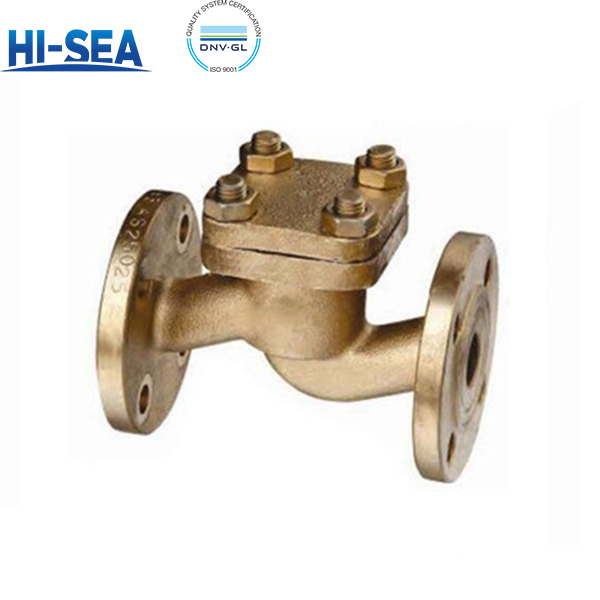
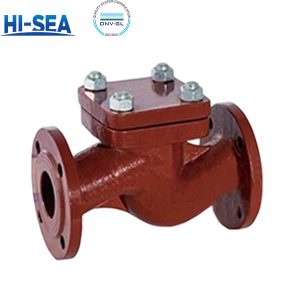
The A/AS series are straight-through, flanged bronze check valves for ship piping. A guided disc lifts off the seat and closes on reverse flow, protecting pumps, heat exchangers, and deck machinery from back-flow damage without any actuator, spring setting, or external power. It covers fresh water, seawater, lube oil, fuel oil, air, and steam up to 250 °C, in PN6 to PN25 and DN15 to DN250.
The body, disc, and cover are cast copper alloy, ensuring the wetted path is corrosion-resistant without linings or coatings. Two alloys are offered: Cast Tin Bronze (Q1) is the cost-effective choice for general shipboard duty and low-pressure ambient seawater (e.g., ballast water). Nickel-Aluminium Bronze (Q2) carries a higher initial material cost, but it is recommended for high-velocity or critical seawater systems, where its superior erosion-corrosion resistance offsets the initial investment with a significantly longer service life. Gasket and fastener selections are strictly dictated by the operating medium to ensure sealing integrity (refer to the material table below).
Valves are designed, manufactured, and accepted to GB/T 589—2026, with strength, tightness, wall thickness, and tolerance requirements referenced to GB/T 600—2023. For the AS type, face-to-face dimensions strictly follow GB/T 11698—2026. Every valve undergoes 100% pressure and leak testing, and every casting heat is backed by retained test bars for full traceability. Specific clauses and tolerances are listed in the Quality & Compliance section below.
Quick Selection Guide
A or AS? (flange standard)
A type — flange connection dimensions and sealing face to CB/T 4196—2011. Choose it when the line is already flanged to that marine standard; it is the only option above DN150 at PN10 (up to DN250).
AS type — flange to GB/T 9124.1—2019 (PN series). Choose it for piping built on PN-series flanges, and when you need small bores from DN15 (PN6 and PN25).
tin bronze or nickel-aluminium bronze
Q1 tin bronze — best suited for fresh water, lube oil, fuel oil, air and low-pressure seawater. Covers the majority of engine-room lines at the lowest material cost.
Q2 nickel-aluminium bronze — recommended when the medium is seawater, or where downtime cost is high and the valve sits in a critical seawater system. Higher initial material cost, significantly longer service life. Aluminium bronze is exposed to dealuminification in seawater; a de-alloying-resistant treatment can be applied on request. Q2 valves are about 8% lighter than the Q1 theoretical mass — the two are therefore not directly comparable on a pure cost-per-kilo basis.
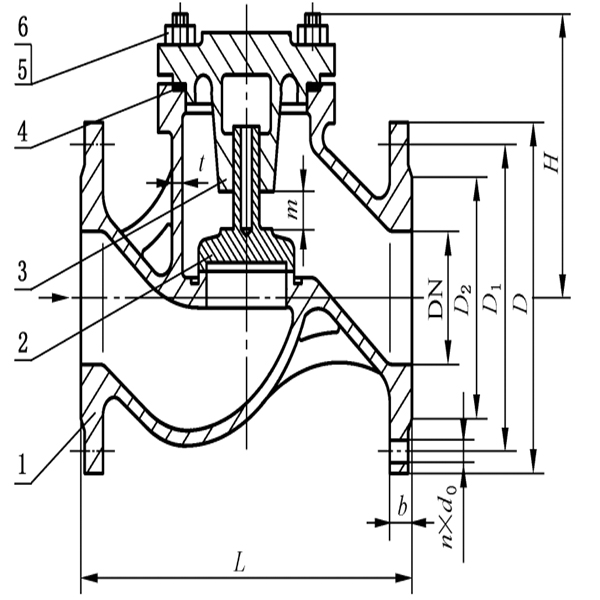
Basic Sructure Of Marine Bronze Flanged Check Valve — A / AS Type
Pressure & Size Coverage (Basic Parameters)
| Type |
PN |
Max. working pressure (MPa) |
Nominal size DN (mm) |
Flange standard |
| A |
10 |
1.0 |
65 – 250 |
CB/T 4196—2011 |
| A |
16 |
1.6 |
125, 150 |
CB/T 4196—2011 |
| A |
25 |
2.5 |
20 – 100 |
CB/T 4196—2011 |
| AS |
6 |
0.6 |
15 – 150 |
GB/T 9124.1—2019 |
| AS |
16 |
1.6 |
65 – 150 |
GB/T 9124.1—2019 |
| AS |
25 |
2.5 |
15 – 100 |
GB/T 9124.1—2019 |
Service media: fresh water, seawater, lube oil, fuel oil, air, and steam not exceeding 250 °C.
A Type: Structure Dimensions (Unit: mm / kg)
| PN |
DN |
L |
H ≈ |
Wall t |
Lift m |
Mass (Q1) |
| 10 |
65 |
290 |
123 |
6 |
19 |
13.3 |
| 10 |
80 |
310 |
139 |
6 |
23 |
16.4 |
| 10 |
100 |
350 |
160 |
6 |
28 |
24.6 |
| 10 |
125 |
400 |
185 |
7 |
35 |
37.0 |
| 10 |
150 |
480 |
235 |
7 |
38 |
49.0 |
| 10 |
200 |
600 |
320 |
8 |
59 |
90.5 |
| 10 |
250 |
730 |
387 |
9 |
65 |
130.0 |
| 16 |
125 |
400 |
197 |
7 |
35 |
45.8 |
| 16 |
150 |
480 |
235 |
8 |
38 |
68.0 |
| 25 |
20 |
150 |
79 |
5 |
6 |
4.2 |
| 25 |
25 |
160 |
80 |
5 |
7 |
4.6 |
| 25 |
32 |
180 |
85 |
5 |
9 |
5.4 |
| 25 |
40 |
200 |
88 |
5 |
12 |
7.0 |
| 25 |
50 |
230 |
109 |
6 |
15 |
9.2 |
| 25 |
65 |
290 |
123 |
7 |
19 |
14.9 |
| 25 |
80 |
310 |
150 |
8 |
23 |
21.8 |
| 25 |
100 |
350 |
155 |
8 |
28 |
33.6 |
L = face-to-face length; H ≈ = approximate overall height; m = disc lift. Mass given is the theoretical mass for cast tin bronze (Q1); when nickel-aluminium bronze (Q2) is selected, deduct 8%.
A Type: Flange Connection Data (Unit: mm)
| PN |
DN |
D |
D1 |
D2 |
d0 |
b |
n |
Bolt Th. |
| 10 |
65 |
155 |
123 |
104 |
15 |
14 |
6 |
M14 |
| 10 |
80 |
170 |
138 |
118 |
15 |
14 |
8 |
M14 |
| 10 |
100 |
190 |
158 |
138 |
15 |
14 |
8 |
M14 |
| 10 |
125 |
215 |
183 |
164 |
15 |
14 |
10 |
M14 |
| 10 |
150 |
240 |
208 |
190 |
15 |
14 |
12 |
M14 |
| 10 |
200 |
310 |
273 |
250 |
17 |
17 |
12 |
M16 |
| 10 |
250 |
380 |
336 |
310 |
21 |
21 |
14 |
M20 |
| 16 |
125 |
225 |
187 |
168 |
17 |
17 |
10 |
M16 |
| 16 |
150 |
255 |
217 |
196 |
17 |
19 |
12 |
M16 |
| 25 |
20 |
95 |
68 |
48 |
13 |
12 |
4 |
M12 |
| 25 |
25 |
105 |
73 |
56 |
13 |
13 |
4 |
M12 |
| 25 |
32 |
115 |
83 |
64 |
15 |
13 |
6 |
M14 |
| 25 |
40 |
125 |
93 |
74 |
15 |
14 |
6 |
M14 |
| 25 |
50 |
135 |
103 |
84 |
15 |
14 |
6 |
M14 |
| 25 |
65 |
170 |
132 |
110 |
17 |
17 |
8 |
M16 |
| 25 |
80 |
185 |
147 |
126 |
17 |
19 |
8 |
M16 |
| 25 |
100 |
205 |
167 |
146 |
17 |
19 |
10 |
M16 |
D = flange OD; D1 = bolt circle; D2 = sealing face dia.; d0 = bolt hole dia.; b = flange thickness; n = bolt quantity. Flange dimensions to CB/T 4196—2011.
AS Type: Structure Dimensions (Unit: mm / kg)
| PN |
DN |
L |
H ≈ |
Wall t |
Lift m |
Mass (Q1) |
| 6 |
15 |
130 |
84 |
4 |
7 |
3.3 |
| 6 |
20 |
150 |
84 |
4 |
7 |
3.8 |
| 6 |
25 |
160 |
84 |
4 |
7 |
4.2 |
| 6 |
32 |
180 |
90 |
5 |
9 |
6.2 |
| 6 |
40 |
200 |
101 |
5 |
12 |
7.8 |
| 6 |
50 |
230 |
110 |
5 |
15 |
9.1 |
| 6 |
65 |
290 |
122 |
6 |
19 |
18.0 |
| 6 |
80 |
310 |
153 |
6 |
23 |
20.1 |
| 6 |
100 |
350 |
162 |
6 |
28 |
29.4 |
| 6 |
125 |
400 |
182 |
7 |
35 |
35.7 |
| 6 |
150 |
480 |
235 |
7 |
38 |
46.0 |
| 16 |
65 |
290 |
136 |
6 |
19 |
16.4 |
| 16 |
80 |
310 |
158 |
6 |
23 |
23.1 |
| 16 |
100 |
350 |
170 |
6 |
28 |
38.4 |
| 16 |
125 |
400 |
185 |
7 |
35 |
45.2 |
| 16 |
150 |
480 |
235 |
8 |
38 |
62.5 |
| 25 |
15 |
130 |
84 |
5 |
7 |
4.9 |
| 25 |
20 |
150 |
84 |
5 |
7 |
5.3 |
| 25 |
25 |
160 |
84 |
5 |
7 |
5.8 |
| 25 |
32 |
180 |
90 |
5 |
9 |
8.0 |
| 25 |
40 |
200 |
101 |
5 |
12 |
10.0 |
| 25 |
50 |
230 |
110 |
6 |
15 |
12.0 |
| 25 |
65 |
290 |
136 |
7 |
19 |
17.5 |
| 25 |
80 |
310 |
158 |
7 |
23 |
24.4 |
| 25 |
100 |
350 |
170 |
8 |
28 |
40.7 |
Face-to-face length (L) tolerance for AS type is governed by GB/T 11698—2026. Theoretical mass is for cast tin bronze (Q1); deduct 8% for nickel-aluminium bronze (Q2).
AS Type: Flange Connection Data (Unit: mm)
| PN |
DN |
D |
D1 |
D2 |
d0 |
b |
n |
Bolt Th. |
| 6 |
15 |
80 |
55 |
40 |
11 |
12 |
4 |
M10 |
| 6 |
20 |
90 |
65 |
50 |
11 |
12 |
4 |
M10 |
| 6 |
25 |
100 |
75 |
60 |
11 |
14 |
4 |
M10 |
| 6 |
32 |
120 |
90 |
70 |
14 |
15 |
4 |
M12 |
| 6 |
40 |
130 |
100 |
80 |
14 |
16 |
4 |
M12 |
| 6 |
50 |
140 |
110 |
90 |
14 |
17 |
4 |
M12 |
| 6 |
65 |
160 |
130 |
110 |
14 |
17 |
4 |
M12 |
| 6 |
80 |
190 |
150 |
128 |
18 |
19 |
4 |
M16 |
| 6 |
100 |
210 |
170 |
148 |
18 |
20 |
4 |
M16 |
| 6 |
125 |
240 |
200 |
178 |
18 |
20 |
8 |
M16 |
| 6 |
150 |
265 |
225 |
202 |
18 |
20 |
8 |
M16 |
| 16 |
65 |
185 |
145 |
122 |
18 |
17 |
4 a) |
M16 |
| 16 |
80 |
200 |
160 |
138 |
18 |
19 |
8 |
M16 |
| 16 |
100 |
220 |
180 |
158 |
18 |
20 |
8 |
M16 |
| 16 |
125 |
250 |
210 |
188 |
18 |
22 |
8 |
M16 |
| 16 |
150 |
285 |
240 |
212 |
22 |
22 |
8 |
M20 |
| 25 |
15 |
95 |
65 |
45 |
14 |
12 |
4 |
M12 |
| 25 |
20 |
105 |
75 |
58 |
14 |
12 |
4 |
M12 |
| 25 |
25 |
115 |
85 |
68 |
14 |
14 |
4 |
M12 |
| 25 |
32 |
140 |
100 |
78 |
18 |
15 |
4 |
M16 |
| 25 |
40 |
150 |
110 |
88 |
18 |
16 |
4 |
M16 |
| 25 |
50 |
165 |
125 |
102 |
18 |
17 |
4 |
M16 |
| 25 |
65 |
185 |
145 |
122 |
18 |
17 |
8 |
M16 |
| 25 |
80 |
200 |
160 |
138 |
18 |
19 |
8 |
M16 |
| 25 |
100 |
235 |
190 |
162 |
22 |
20 |
8 |
M20 |
Material of Construction
| Part |
Material |
Grade |
Standard |
| Body, disc, cover |
Cast tin bronze |
ZCuSn5Pb5Zn5 |
GB/T 1176—2013 |
| Body, disc, cover |
Nickel-aluminium bronze |
ZCuAl9Fe4Ni4Mn2 |
GB/T 1176—2013 |
| Gasket |
PTFE |
PTFE |
QB/T 4041—2010 |
| Gasket |
Flexible graphite |
RSM |
CB/T 3589—1994 |
| Stud |
Stainless steel |
A4-70 |
GB/T 3098.6—2023 |
| Nut |
Stainless steel |
A4-50 |
GB/T 3098.15—2023 |
Nickel-aluminium bronze is recommended for seawater service. For fuel oil and steam, the gasket shall be flexible graphite. Aluminium bronze is subject to dealuminification in seawater; de-alloying-resistant treatment is available on request.
QA & Compliance
Pressure integrity — Strength per GB/T 600—2023 §4.14 and tightness per §4.15, both invoked by §5.2 / §5.3; tested to §5.1.1.3 and §5.1.2.3. Both are mandatory routine-test items, inspected valve by valve (§7.3.2, Table 5).
Wall thickness & dimensions — wall per GB/T 600—2023 §4.2 with tolerance §4.5.1; linear tolerances §4.5, form and position §4.7 (§5.4.1, §5.4.2, §5.5).
Face-to-face length — A type to the approved drawing tolerance; AS type to GB/T 11698—2026 (§5.4.3), so replacement valves drop into existing pipe runs.
Assembly — §5.6 → GB/T 600—2023 §4.10, checked to §6.5. Added as a separate requirement in the 2026 edition.
Mass control — positive deviation ≤ 4% of theoretical mass, weighed on a scale with 0.01 kg division (§5.8, §6.7). Mass is a negotiated item in routine testing, not a default pass/fail.
Traceability & acceptance — minimum 3 test bars per casting heat, marked with the heat number and retained ≥ 3 years (§5.1.2). Type test on 3 samples; any non-conformance triggers double sampling (§7.2.3, §7.2.4). Marking to GB/T 3032, packing and storage to GB/T 600—2023 §6.3 and §6.4.
FAQ
type or AS type — what is the actual difference?
Only the flange interface. A type uses CB/T 4196—2011 connection dimensions and sealing faces; AS type uses GB/T 9124.1—2019 (PN series). Body design, disc, materials and testing are identical. Order by the flange standard your piping is built to — sending us an existing flange drawing is the fastest way to confirm.
Seawater line — can I stay with tin bronze to save cost?
Best suited for seawater is nickel-aluminium bronze (Q2): the standard recommends it for seawater media. Tin bronze (Q1) remains a valid, cost-effective choice for fresh water, lube oil, fuel oil, air and low-pressure seawater. Q2 carries a higher initial material cost but delivers significantly longer service life in critical seawater systems; aluminium bronze also carries a dealuminification risk in seawater, which can be mitigated with a de-alloying-resistant treatment. Because Q2 is roughly 8% lighter, the two are not directly comparable on a cost-per-kilo basis.